Re:Vision: Tri
Tickets

On sale veezi.com
About
A landmark from the golden age of New Yugoslav Film (1963-1973), a compelling and under appreciated (at least in America) chapter in global film history. Aleksandar Petrović’s gripping Tri [Three] showcases the horror and absurdity of war through three interconnected tales, each examining moral choices under extreme pressure. Nominated for Academy Award for Best Foreign Picture (1966) and listed by the Yugoslav Film Institute as The Best Film in the history of the Yugoslav Cinema.
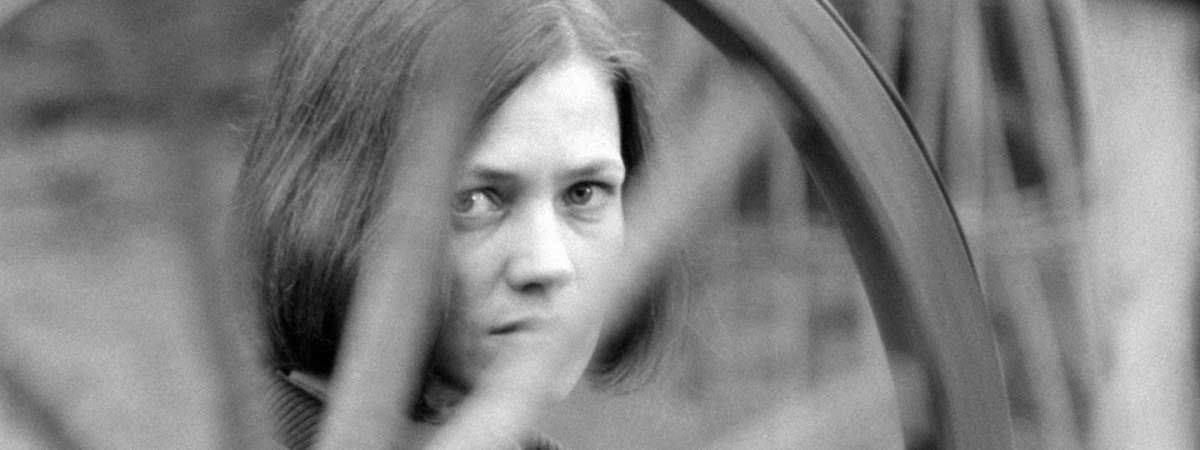
Featuring searingly unforgettable black and white cinematography by Tomislav Pinter, Tri is structured as a triptych with stories set at the beginning, middle and end of the Second World War in Yugoslavia (1941-1944). The protagonist is a partisan portrayed by Velimir Bata Živojinović though according to the director, “The real protagonist of this film is death. In this film, it appears in three forms – as punishment, as victim, and as an expression of the senselessness of war. One needs to be against war, but one needs to be against war as a matter of principle, against anybody who wages war, and also against those who create reasons for war.” — Robert Byrne
Restored in 2019 at Delta Video laboratory from a 35mm negative preserved by Jugoslovenska Kinoteka.
Tri will screen with the following short:
LES ENFANTS DE LA GUERRE [CHILDREN OF WAR] (Jocelyn Saab, Lebanon, 1976) 11m, DCP
Karantina was a Muslim-inhabited district of Beirut inhabited by Palestinians, Kurds, Armenians, Syrians, and Lebanese Muslims. On 18 January 1976, early in the Lebanese Civil War, the district was overrun by militias of the right-wing and mostly Christian Lebanese Front, resulting in the deaths of approximately 600-1,500 people. According to then-Washington Post-correspondent Jonathan Randal: “Many Muslim men and boys were rounded up and separated from the women and children and massacred; while many of the women and young girls were violently raped and murdered.“
In the days following the massacre, filmmaker Jocelyne Saab found and met children who escaped, deeply traumatized by the horrors they had witnessed. The filmmaker gave the children crayons and encouraged them to draw. The process revealed that the only “play” the children engaged in were war games.
Jocelyn Saab was born in 1948 and grew up in Beirut. In 1973, she became a war reporter in the Middle East, covering the October War for a television channel in France. In 1975, she directed her first feature-length documentary, Lebanon in Turmoil. She went on to cover the Lebanese Civil War for fifteen years, during which time she directed almost thirty films, including Les enfants de la guerre. — Robert Byrne
This restoration is based on a 2K scan of Jocelyne Saab’s original 16mm reversal work print and the 16mm magnetic sound element preserved at the Archives françaises du film. The restoration was led by l’Association Jocelyne Saab in partnership with Polygone étoile/Film Flamme (Marseille) and ThePostOffice (Beirut).
Runtime
1h 30m
Year
1965
Director
Aleksandar Petrović
Format
DCP
Country
Yugoslavia
Language
Serbo-Croatian with English subtitles
First Showing
September 27, 2026
Categories
RE:VISION — FESTIVAL OF RESTORATION AND REDISCOVERY
,
Featured
Featuring searingly unforgettable black and white cinematography by Tomislav Pinter, Tri is structured as a triptych with stories set at the beginning, middle and end of the Second World War in Yugoslavia (1941-1944). The protagonist is a partisan portrayed by Velimir Bata Živojinović though according to the director, “The real protagonist of this film is death. In this film, it appears in three forms – as punishment, as victim, and as an expression of the senselessness of war. One needs to be against war, but one needs to be against war as a matter of principle, against anybody who wages war, and also against those who create reasons for war.” — Robert Byrne
Restored in 2019 at Delta Video laboratory from a 35mm negative preserved by Jugoslovenska Kinoteka.
Tri will screen with the following short:
LES ENFANTS DE LA GUERRE [CHILDREN OF WAR] (Jocelyn Saab, Lebanon, 1976) 11m, DCP
Karantina was a Muslim-inhabited district of Beirut inhabited by Palestinians, Kurds, Armenians, Syrians, and Lebanese Muslims. On 18 January 1976, early in the Lebanese Civil War, the district was overrun by militias of the right-wing and mostly Christian Lebanese Front, resulting in the deaths of approximately 600-1,500 people. According to then-Washington Post-correspondent Jonathan Randal: “Many Muslim men and boys were rounded up and separated from the women and children and massacred; while many of the women and young girls were violently raped and murdered.“
In the days following the massacre, filmmaker Jocelyne Saab found and met children who escaped, deeply traumatized by the horrors they had witnessed. The filmmaker gave the children crayons and encouraged them to draw. The process revealed that the only “play” the children engaged in were war games.
Jocelyn Saab was born in 1948 and grew up in Beirut. In 1973, she became a war reporter in the Middle East, covering the October War for a television channel in France. In 1975, she directed her first feature-length documentary, Lebanon in Turmoil. She went on to cover the Lebanese Civil War for fifteen years, during which time she directed almost thirty films, including Les enfants de la guerre. — Robert Byrne
This restoration is based on a 2K scan of Jocelyne Saab’s original 16mm reversal work print and the 16mm magnetic sound element preserved at the Archives françaises du film. The restoration was led by l’Association Jocelyne Saab in partnership with Polygone étoile/Film Flamme (Marseille) and ThePostOffice (Beirut).
Runtime
1h 30m
Year
1965
Director
Aleksandar Petrović
Format
DCP
Country
Yugoslavia
Language
Serbo-Croatian with English subtitles
First Showing
September 27, 2026
Categories
RE:VISION — FESTIVAL OF RESTORATION AND REDISCOVERY
,
Featured